
Water softeners are a very necessary appliance in some parts of the country where the water is “hard”. In these places water softeners are a common occurrence. Around the Charleston Lowcountry area…. not so much. However we do see water softeners occasionally and sometimes well observe a system someone might mistake for a water softener. In spite of the fact that water softeners are such a rare occurrence around here, we’re still going to delve into this complex topic and hopefully dissect it into more easily understandable portions. Plus we’re not going to fiddle-faddle about this. So let’s get started.
What is Hard Water?
Hard water is water with elevated levels of calcium and magnesium. Although a few other minerals can contribute to this condition calcium and magnesium are the main culprits. Some of these other minerals like iron and manganese can also be treated if they’re a nuisance but for now let’s concentrate on the basics before branching off into tangents. If the levels of calcium and magnesium in the water exceeds 7 gpg (grains per gallon) or 120 ppm (parts per million) then it’s considered hard. So you’ll have to get your water tested. The testing results will be needed when the water softener is initially set up so it can be entered into the control panel. The system will use this information to set the parameters for the regeneration cycle.
Hard water is a concern for plumbing fixtures and piping because the calcium and magnesium has a tendency to build up causing scale and premature failure of water heaters etc. Also excess calcium and magnesium increases soap scum and reduces the effectiveness of detergents to clean clothes for instance. Some calcium and magnesium in our diets are actually good for us but that’s another subject altogether.
In South Carolina the water is hardest in the mountains and diminishes to soft water as we approach the Coastal Plains.
How does a water softener work?
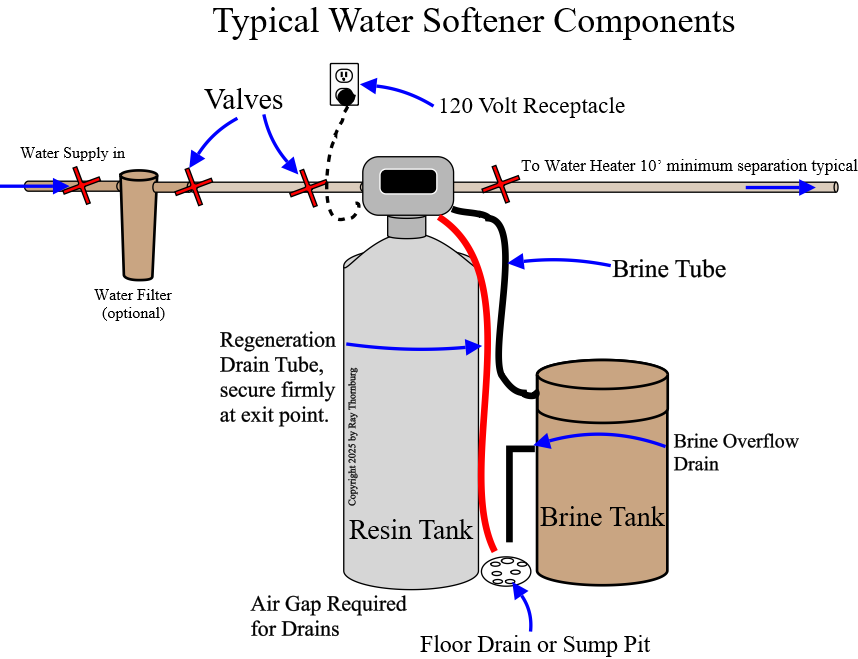
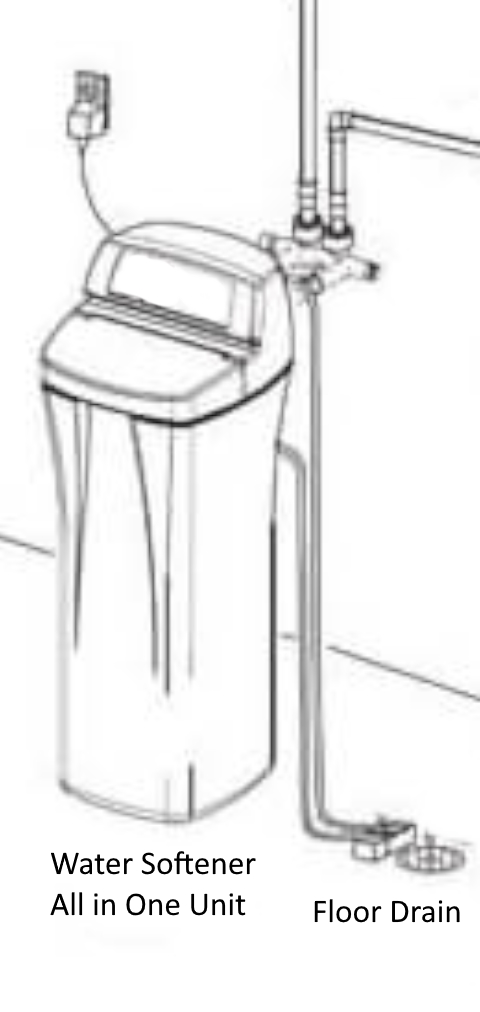
A typical water softener will have two tanks. A resin tank and a salt tank. Although some newer models combine these into one tank they operate the same way. Water enters the resin tank filled with resin beads. These beads carry a negative charge and attract positive charged calcium and magnesium ions. The hardness minerals stick to the beads while the sodium and potassium ions are released into the water. This softened water then flows back into your home.
The Regeneration Process
Over time the resin beads get saturated with hardness ions and the system washes them out using a brine solution located in the salt tank. This brine solution is disposed of afterward through a drain tube. This process restores the beads ability to attract hardness ions. The system can then carry on until the next regeneration cycle. On most residential homes this regeneration cycle will happen about once a week in the middle of the night to avoid disruptions. The typical brine discharge can be between 30- 80 gallons. This is determined by the amount of water which is used and the amount the system will have to treat to get to the desired hardness setting. The regeneration process typically takes an hour or two and during that time you should not use water as it disrupts the process and you could bring in some unsatisfactory water.
The Brine Discharge
This discharge must be disposed of in an approved way. Check your local municipality’s regulations. Some municipalities prohibit discharging it directly onto the ground. Some options for discharge can include-
Public sanitary sewer system.
Dry well.
French drain trench dedicated for this.
Some locations not recommended for discharge-
Under the home in the crawlspace.
Private septic system (unless designed for this).
Storm sewer systems (designed to handle storm water).
Directly onto the ground near any plant growth that may be negatively affected by salty water.
Use an Air Gap Device
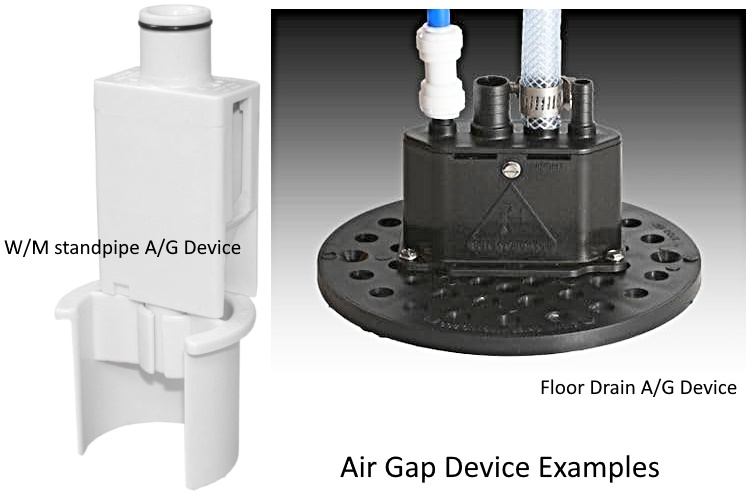
Since the brine discharge can come out with some force it’s necessary to secure the end of the drain tube so it won’t flop around spraying water everywhere. It’s necessary to use an air gap device. An air gap device maintains about an 1.5” gap between the drain water and the receiving pipe or pan in order to prevent back siphonage. These devices fit on top of your washing machine standpipe or a floor drain to maintain that required gap. It’s also possible to discharge the brine into a laundry tub.
Secure Your Installation
The resin and brine tanks should be securely mounted preferably on a concrete floor. It should also be in a place which will not freeze. Freezing will destroy the equipment. Exposed piping should be insulated in in unheated areas. There should be water disconnects so the equipment can be serviced. If a bypass valve is not already built into the unit it’s a good idea to have one installed. Also if the equipment is located in an area which requires a GFIC electrical receptacle (like crawlspaces, a laundry room, outside or a garage) then that has to be provided too. Water softeners are sometimes an afterthought so finding an unprofessional installation is not that unusual in this area.
The Look Alikes
We know that a typical water softener has a resin tank and a brine tank and that some models combine these two into one unit. What you may not know is that there are more than several technologies that use similar looking tanks to filter the water in residential homes. They may have a single tank, a double tank, or a single tank and a “brine” tank for the chemical they’re adding. To add to the confusion there is almost never a label on the system which tells people what the system is designed to do or what kind of maintenance to perform on they system they installed. I think this is one of the reasons why inspecting water softeners are beyond the scope of a home inspection. At any rate we’ll discuss several systems which may look like a water softener but are actually designed for other things.
Backwashing Carbon (GAC) or Catalytic Carbon
Has one tall tank, like a softener resin tank that performs back washing operation occasionally. No brine tank.
Purpose is to remove chlorine, chloramines, tastes, odors, hydrogen sulfide (rotten egg smell).
Iron Filters, air injection or chemical oxidation
Has one tall tank and one short tank for chemicals (not salt, but depending on system could be hydrogen peroxide or chlorine).
Removes iron, manganese and sulfur odors.
Chlorination/Dechlorination Systems
These can have a chemical feed tank that holds chlorine or peroxide instead of salt.
Paired with either a chlorine contact tank or a carbon backwash tank.
Nitrate or Tannin Removal Systems
Ion exchange system (just like water softeners)
Nearly identical to a water softener. Uses same tanks and salt in the brine tank.
Dual Tank Water Softener
These are just water softeners with dual resin tanks so the system can run continuously even when regenerating. So two tall resin tanks and one salt tank are present.
PH Neutralizers-
These systems are designed to correct water which is too acetic. Water which is too acetic can corrode piping systems especially copper. A single calcite or corosex tank is used to run the water through which lowers its PH to an acceptable level. These systems can have a single tank which resembles a resin tank in a regular water softener system. Some have an extra fill hole to add the media and some require you to unscrew the head controls.
KDF Systems-
- KDF (Kinetic Degradation Fluxion) systems use catalytic carbon and KDF in a process called redox (oxidation/reduction) that uses copper and zinc to eliminate hardness, chloramines, heavy metals, lead, hydrogen sulfide, mercury,iron and other contaminates.
- Theses systems often have a water filter and two large tanks.
- This type system offers low maintenance and no brine tank or brine discharge.
An internet search will reveal more information about any of these systems should you desire it.
Other Systems
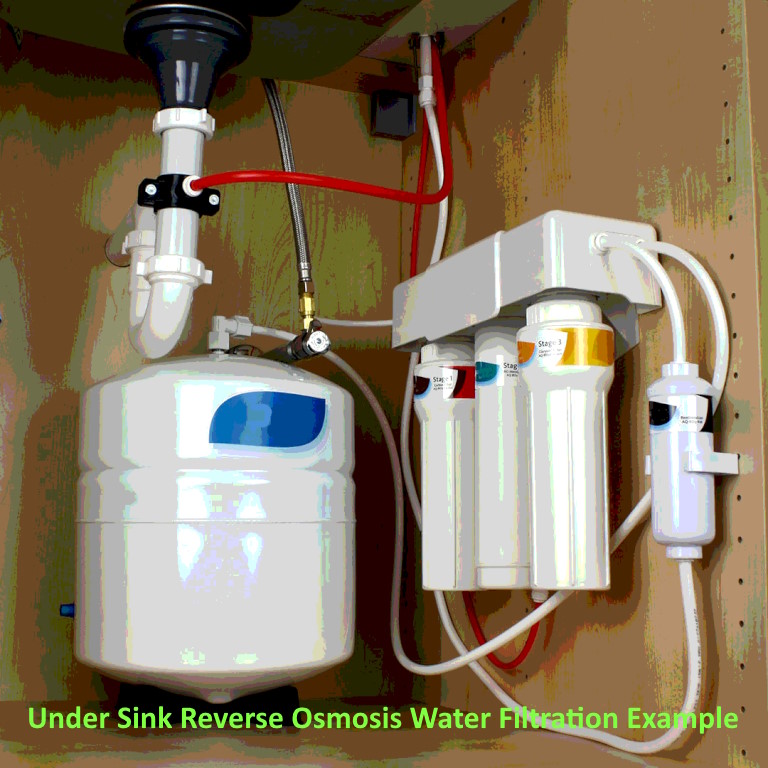
One of the non look alikes is the reverse osmosis system. This system for a whole home is characterized by 2-4 large upright cylinders (like the resin cylinders) and a larger cylinder that is used to store water for instant availability. It may also have a pump nearby with pre treatment filters and a post treatment system. Essentially, in a reverse osmosis system the piping is pressurized to force water through a membrane with holes so small only pure water can pass through…This is why a water storage tank is nearby. It to store water for instant demand as it takes time to force water through this membrane. There is sometimes smaller versions of this type system underneath kitchen sinks. Since this system does not look like a regular water softener there is no chance of confusing the two.
Maintenance for Water Softeners
Manage salt levels every 4-6 weeks. Keep bin at least ½ full but not all the way full either. Break up salt bridges (hard crust above water line).
Clean brine tank every 6-12 months. Scope out salt, rinse and clean and refill.
Verify regeneration settings quarterly. Confirm hardness setting match your actual water hardness.
Test your hardness level every 3-6 months. Test after the softener to see if the hardness is creeping up. If you’re on a well test for iron too as even a small amount of iron can foul resin beads.
Use resin cleaner every 6-12 months.
Sanitize system annually.
Check the system for wear, leaks, proper water level air gap etc. Too much water in brine tank could be clogged drain line.
Schedule professional maintenance every 1-2 years. They can check the resin condition and other things before they become failure points.
Common Deficiencies
In this neck of the woods observing a functional water softener without any issues is a rare occurrence. The inspector may stumble upon these things while inspecting a pump house or crawlspace and sometimes these installations are often not well thought out. In these cases freeze protection, stability and accessibility is a concern. Often neither the buyers or the sellers are able to properly communicate what type of system is located on their property. So maintenance may have been neglected. While inspecting these systems are beyond the scope of a home inspection most inspectors will feel a need to help guide their clients in the right direction concerning these appliances. So let’s discuss what we find out in the field.
Pump house location- The issues of locating a system in the well pump house can be multiple. Often the purpose of the “water softener” is not communicated to the inspector. Well pump houses frequently have a dirt floor so is unstable for other equipment. Freeze protection is frequently absent. Also a pump house often does not have a properly grounded 120 volt receptacle outlet for the system. If the brine regeneration drain tube drains beside the pump house this would be a cross contamination issue. Brine should discharge at least 75 feet away from the well.
Crawl space location- This location is often chosen to limit the amount of plumbing associated with installing such a system. Accessibility is a concern as you’re likely have to crawl on your hands and knees across the damp and dirty crawlspace just to get to the system. Maintenance is unlikely to have been regularly taken care of. Stability of setting the tanks on the dirt floor is also a concern. Sometimes an extension cord is used to power the system which would be disallowed. A crawlspace is subject to freeze thaw cycles so the whole system is subject to damage during a freeze event which does happen even in the Charleston lowcountry area….occasionally.
Outside next to home- This location is accessible however it is subject to freezing temperatures. The units should be firmly supported and the regeneration brine discharge should be away from the house and according to local regulations.
In the garage- This can be an acceptable location as long as provisions are made to heat the areas when the temperature drops below freezing.
In the laundry room- Excellent location and the brine can be disposed of in the washing machine standpipe in most cases.
Maintenance Issues- Most common is not adding salt. Also if the bin is full of water then likely the drain hose is clogged. Discharging the brine in an unsuitable manner is also a common occurrence.