Without getting into too much detail this article will try to take the mystery out of the different ways plumbers can vent your plumbing system. If you’ve ever noticed the plumbing pipes sticking through the roof you probably knew they were there to vent the plumbing drain piping. While most people understand how an individual vent works the rest can be somewhat of a mystery. There is a lot of science that goes into a properly configured drainage system. We’re going to delve into that but first I encourage you to visit my About Traps, Arms and Vents article to brush up on some of the basics.
Venting drain piping is all about air flow and water flow. If sewage is to flow out, then air has to flow into the piping system. In fact the vents are there to not only let air in but also to let sewer gasses out. Plumbers have come up with a variety of ways to do this that we know work. Below is some of those methods.
Example of plumbing vent sticking through the roof. Plumbing vents allow sewer gasses to escape and allow air into the piping to allow the sewage to flow. Every home must have at least one vent that exits through the roof.
Categories of Venting Methods
Individual Vent
Common Vent
Dry Vent
Wet Vent
Vertical Wet Vent
Circuit Vent
Combination Waste and Vent
AAV (Air Admittance Valve)
The Individual Vent
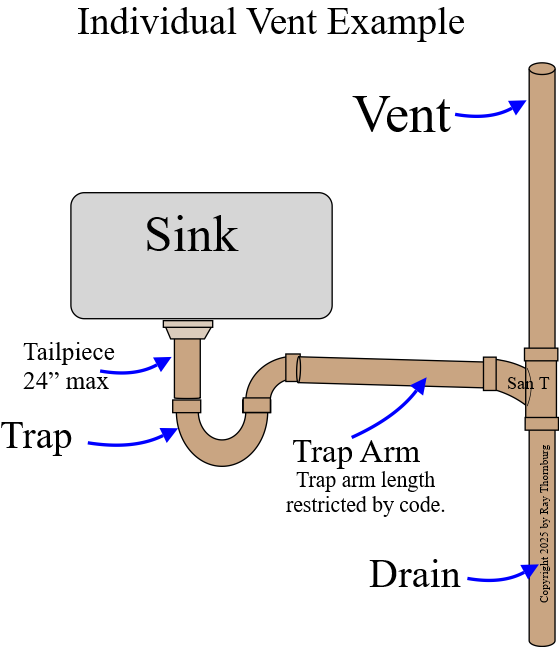
The individual vent serves only one fixture. It’s the simplest and most reliable venting method but it’s also the most expensive as it uses the most material. However the individual vent sets the pattern for all the others.
Trap Arm- Before I go on about the different venting methods lets spend a few minutes discussing the trap arm. It’s essential to understand this. Every plumbing drain has to have a trap (to keep sewer gasses out) and a trap arm. The trap arm is the distance between the trap weir and the vent.
The trap arm can only pitch downward a distance of one pipe diameter at a maximum slope of 1/4″ per foot.
The trap arm also has a minimum length of twice the drain pipe diameter. For instance 1 1/2″ pipe the minimum trap arm length would be 3 inches.
The trap of a toilet is built into the toilet bowl.
Trap must be the same size as the trap arm.
Trap arm length for a water closet (WC) is unlimited. UPC says 6 feet.
Maximum one slip joint on outlet side of trap.
Slip joints must be accessible
Example of an individual vent.
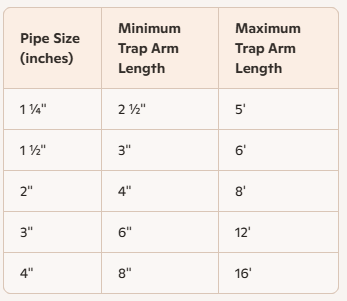
Trap arm length chart according to the IRC. This assumes the maximum drop of 1/4" per foot to the vent/drain. Maximum drop cannot exceed one pipe diameter.
The Common Vent
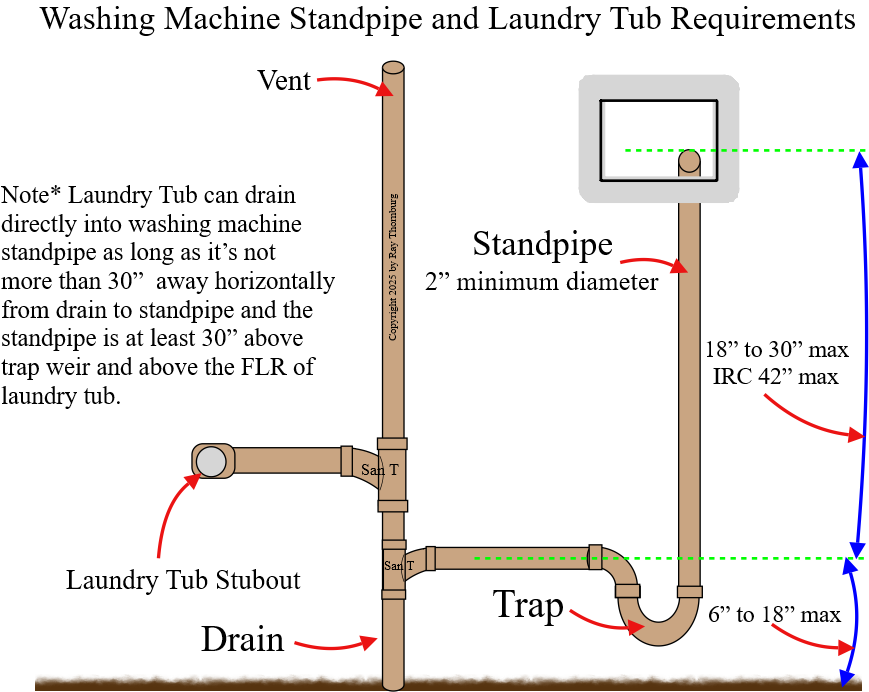
The common vent serves two fixtures on the same floor level. It’s a vertical vent off a vertical drain. The upper fixture cannot be a toilet.
Picture above shows an example of a common vent. This one is venting a laundry tub and a washing machine.
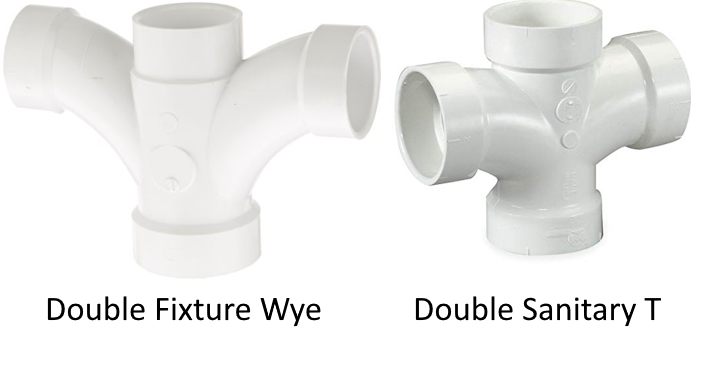
Picture compares a double fixture wye to a sanitary T. In the case above if both the washing machine and laundry sink were at the same level a sanitary T would be improper as the water would cross into the trap arm of the laundry sink. The double fixture wye still allows both to be vented correctly in this case.
The Dry Vent
A dry vent can be an individual vent or a common vent. The dry vent or the portion of the pipe serving as the dry vent does not drain sewage of any type in that section. It only vents.
The Wet Vent
The wet vent can serve as both a drain and a vent. This is often accomplished by over sizing the drain pipe so that it will have room enough for both air and sewage. There are a lot of rules about the sizing of all sorts of plumbing drain lines which must be adhered to. For the most part we’ll leave those technical details to the plumber as this article is only an overview.
The Vertical Wet Vent
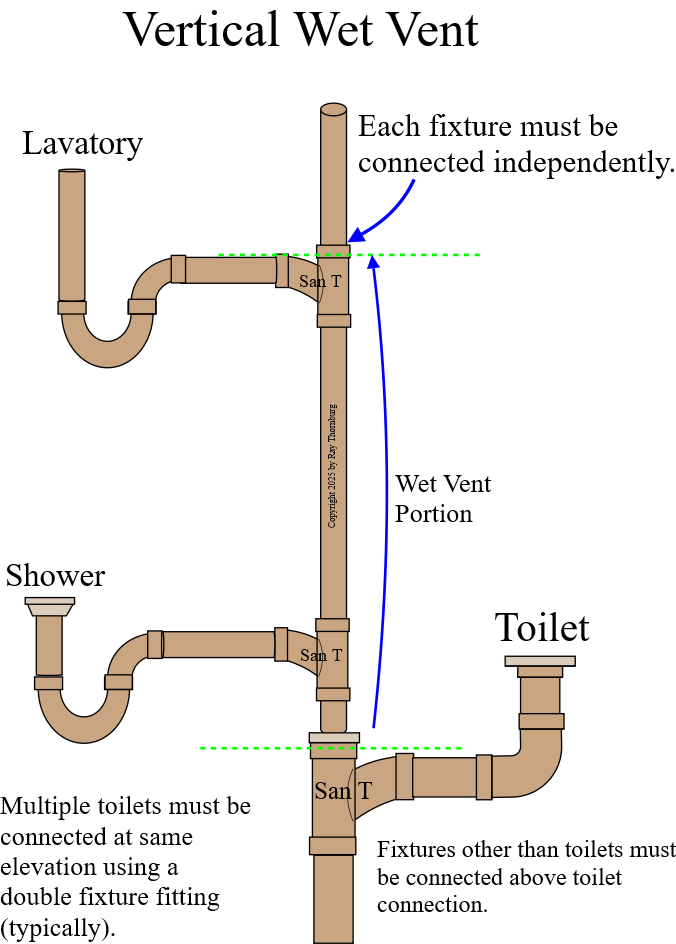
Can serve two bathroom groups. (A bathroom group is “a group of fixtures, including or excluding a bidet, consisting of a water closet, lavatory, and bathtub or shower. Such fixtures are located together on the same floor level.”)
The drain pipe is also a vent pipe.
Must be on the same floor level.
Each fixture must be independently connected to the wet vent.
Fixtures other than toilets must be connected upstream from the toilet connection. In other words the toilet will be below other vented fixtures.
Toilets must connect at the same elevation if more than one.
In the UPC the wet vent is limited to 6 feet of developed length.
Picture above shows one way a vertical wet vent can be configured.
The Horizontal Wet Vent
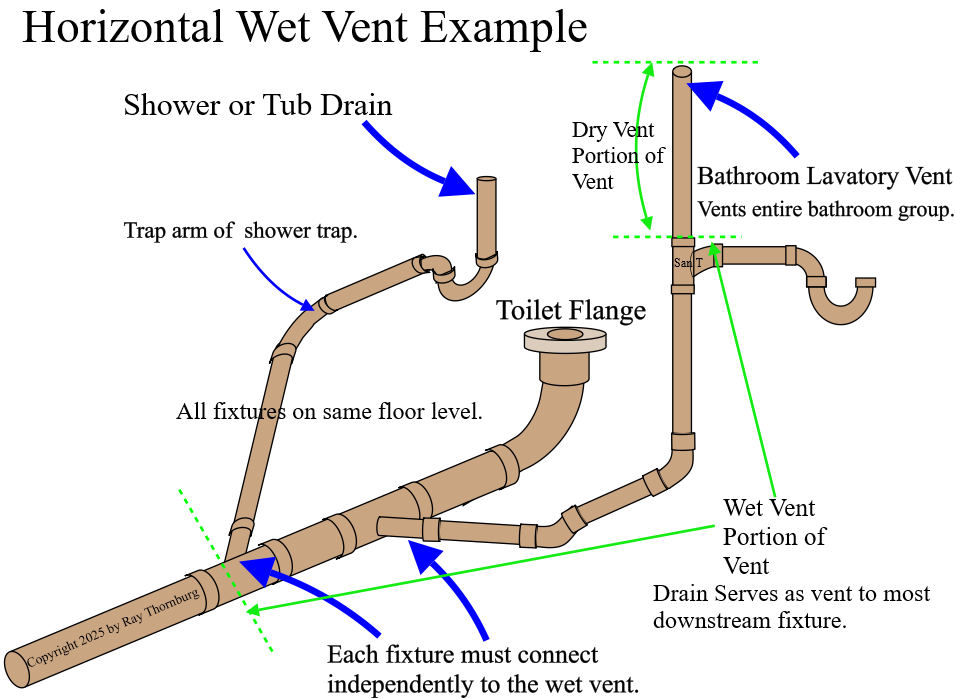
The drain pipe is also used as a vent to the most downstream fixture.
The horizontal wet vent can serve two bathroom groups.
All fixtures must be on the same floor level.
Each fixture must connect independently to the wet vent. (Not adhering to this rule is a common violation.)
Only fixtures within the bathroom group can be connected. Other fixtures (not in bathroom group) must connect downstream of the bathroom group connections so as not to interfere with the horizontal wet vent.
An emergency floor drain vent cannot serve as the wet vent.
UPC- Wet vent is to be vented by one or two lavatories.
UPC- Only one fixture drain can discharge upstream from the dry vented fixture connection.
Picture above shows an example of a horizontal wet vent.
The Circuit Vent
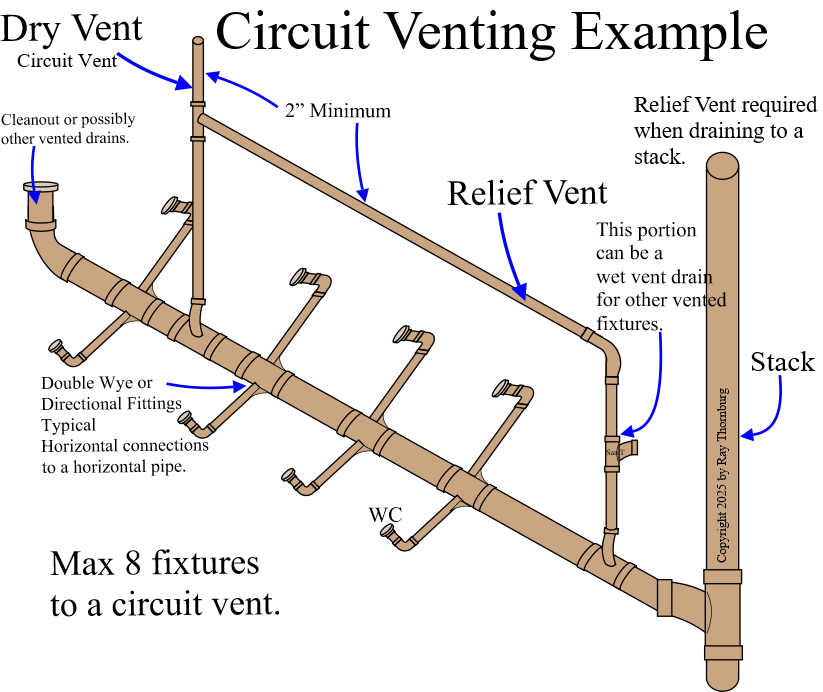
The circuit vent is a kind of horizontal wet vent that is vented by a dry vent which allows more fixture to be connected. It also may have a loop back (relief vent) that connects back to the dry vent which is used when more fixtures are added. In fact a circuit vent resembles a horizontal wet vent except it is required to have a dry vent extending up from the main horizontal drain between the two most upstream fixtures. It can be a very flexible way to meet the venting requirements.
Max 8 fixtures.
Horizontal connections to horizontal branch.
Horizontal pipe is a drain and a vent.
Place a dry vent between the 2 most upstream fixtures.
The circuit vent pipe must be a dry vent.
Circuit vents can connect together.
Other vented fixtures can connect to circuit.
No floor drains connected on a different horizontal plane.
Needs a relief vent if horizontal drain connects to a stack. The relief vent will connect at or below the most downstream connection to the horizontal drain. The drain portion of the relief vent can be a wet vent. It’s required when 4 or more toilets that are connected to a stack are receiving waste from an upper story. Relief vent connects at or below the most downstream fixture in the circuit.
Relief vent minimum size is 2″.
Picture above shows an example of a circuit vent.
The Combination Waste and Vent
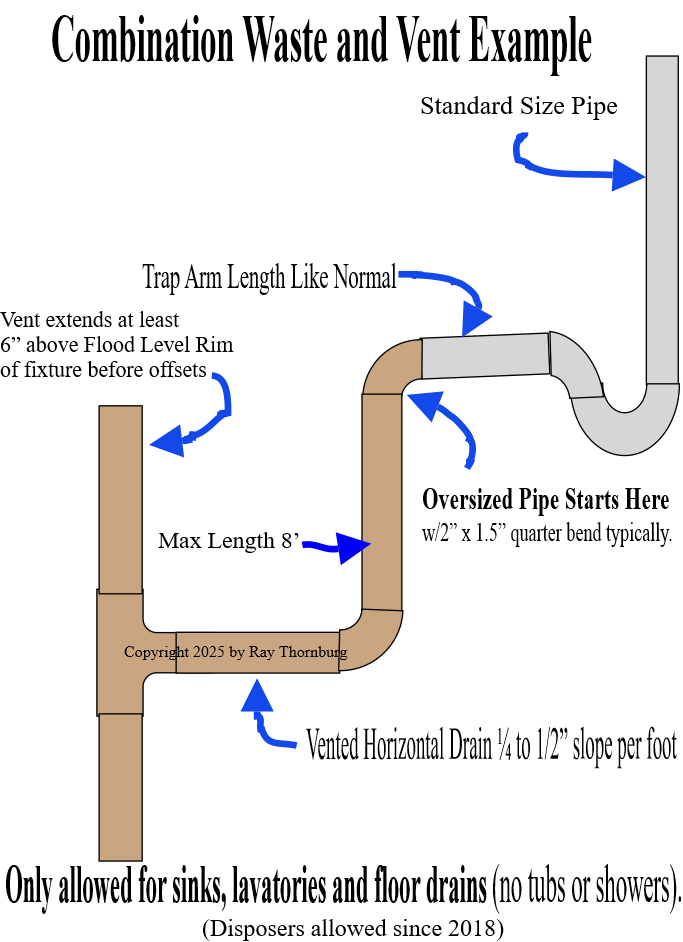
The combination waste and vent pipe might surprise a lot of inspectors because the trap arm dips down in a way which normally would create a S trap. It works in this case because the down pipe is oversized allowing air in to prevent the trap from siphoning dry.
Only allowed for sinks, lavatories and floor drains.
Disposers allowed since 2018.
1, 2, or 3 DFU fixtures only.
Not allowed for tubs or showers.
Not allowed for toilets or urinals.
Vent must rise 6″ minimum above fixture flood level rim before horizontal offsets.
Example of a combination waste and vent drain. The oversized pipe allows air in so the trap will not siphon dry.
AAV Vents (Air Admittance Valves)
Air Admittance Valves are often called studor vents, cheater vents or automatic vents. Their function is to let air in but keep sewer gases out. AAV’s are gaining in popularity and they’re often seen underneath a kitchen island sink. They are sized according to the DFU (drain fixture units) of the drains they serve. According to the 2015 IRC-
OK at individual, branch, circuit and stack vents.
Individual and branch type AAV to vent only fixtures on same floor level that connect to a horizontal branch drain.
Install minimum 4″ above branch or fixture drain.
From trap to AAV same max distance as conventional vent.
Stack type min 6″ above FLR of highest fixture.
AAV’s in attic minimum 6 inches above insulation.
Must be accessible.
Space must be ventilated.
Home requires at least one plumbing vent to outside.
AAV’s not allowed for sewage ejector pumps or tanks.
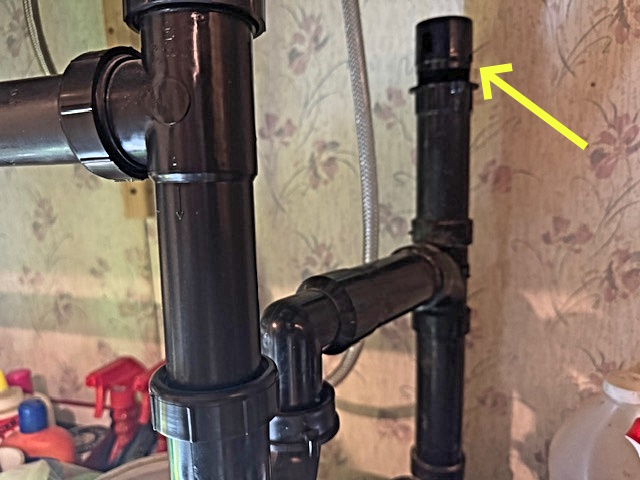
Picture of AAV type vent under a sink.
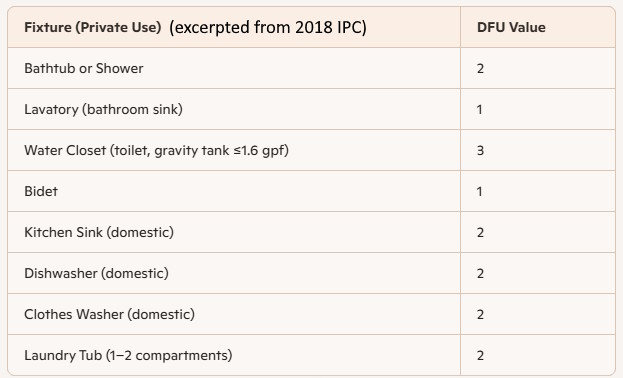
Residential Drain Unit Fixture (DFU) chart. Plumbers use this chart to size drain, vent piping and other plumbing components.
like the AAV vents mentioned above. See the IPC for a complete chart.
There is much more to know on this subject but this is what I have for you so far. My objective was to help people understand what they were looking at by offering a brief summary and a general overview. In that regard I hope it was helpful.
Blue Palmetto Home Inspection Serves the Summerville SC Area!
Call us today at 843-608-5851
1 thought on “Understanding Plumbing Venting Methods”
Uncleray
I’ve never seen such a well written condensed explanation of plumbing venting methods. There’s a lot of good information here. Thanks for the overview.


I’ve never seen such a well written condensed explanation of plumbing venting methods. There’s a lot of good information here. Thanks for the overview.